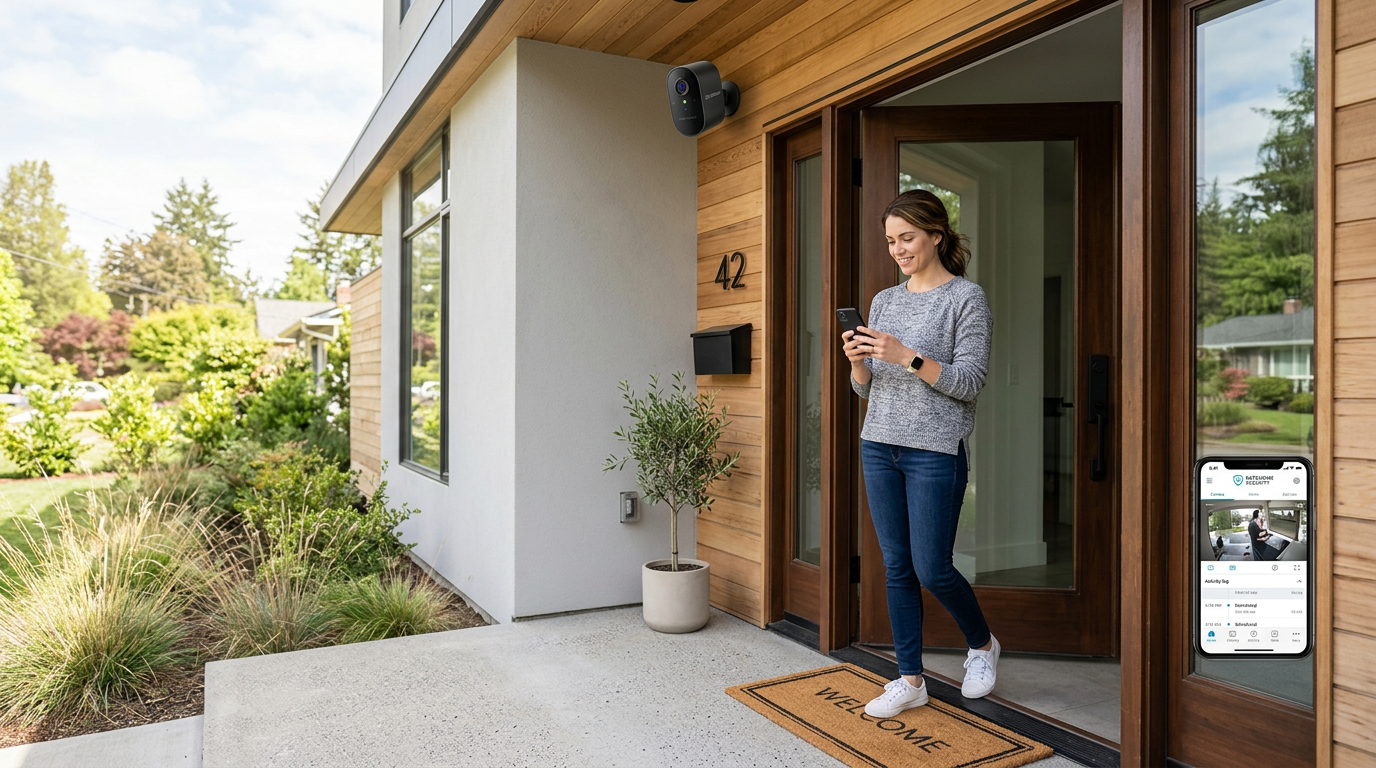
- Front door: Useful for deliveries, visitors, and package theft concerns
- Driveway or street-facing areas: Helpful if you want wider exterior coverage
- Back door or patio: Often overlooked, but important because it may be less visible from the street
If you’re shopping for home security cameras, the hardest part is often not finding options — it’s narrowing them down.
The best system for one home may be a poor fit for another, especially if you’re trying to balance coverage, privacy, ease of installation, and ongoing costs.
→ Your Homes Connection — Contractor Marketplace — free, takes about 60 seconds.
Instead of starting with brand names or premium features, begin with your layout and your actual concerns. Do you want to watch the front door, check on deliveries, monitor a driveway, or keep an eye on pets and kids inside?
The right camera setup should solve those specific problems without creating unnecessary complexity.
Start with what you want to see
Before comparing specs, make a short list of the areas you want covered. That makes it easier to decide how many cameras you need and whether they should be indoors, outdoors, or both.
- Front door: Useful for deliveries, visitors, and package theft concerns.
- Driveway or street-facing areas: Helpful if you want wider exterior coverage.
- Back door or patio: Often overlooked, but important because it may be less visible from the street.
- Interior common areas: Good for checking in on pets, children, or general activity when you’re away.
We go deeper on this in the full breakdown here — worth a read before you decide anything.
Try to think in terms of sightlines. A camera pointed at the wrong angle is less helpful than one placed where it can clearly capture the area you care about.
For example, a camera above a front door may need a narrow view, while a driveway camera often benefits from a wider field of view.
→ See what you could be approved for — free, takes about 60 seconds.
Choose between wired and wireless with your home in mind
One of the biggest decisions is whether to go with wired or wireless cameras. Each can work well, but they solve different problems.
Wired cameras
Wired systems are often a better fit if you want a more permanent setup and don’t want to worry as much about batteries.
They may be a better option for homeowners who are comfortable with a more involved installation or who already have existing wiring in place.
Sources & further reading
This article is for general information only and is not professional financial, legal, or medical advice.
Tom Bishop — Home & Safety Editor
Tom covers home security, improvement, and energy topics, comparing options on cost, reliability, and real-world performance so homeowners can decide with confidence.
Updated August 2026

No comments:
Post a Comment