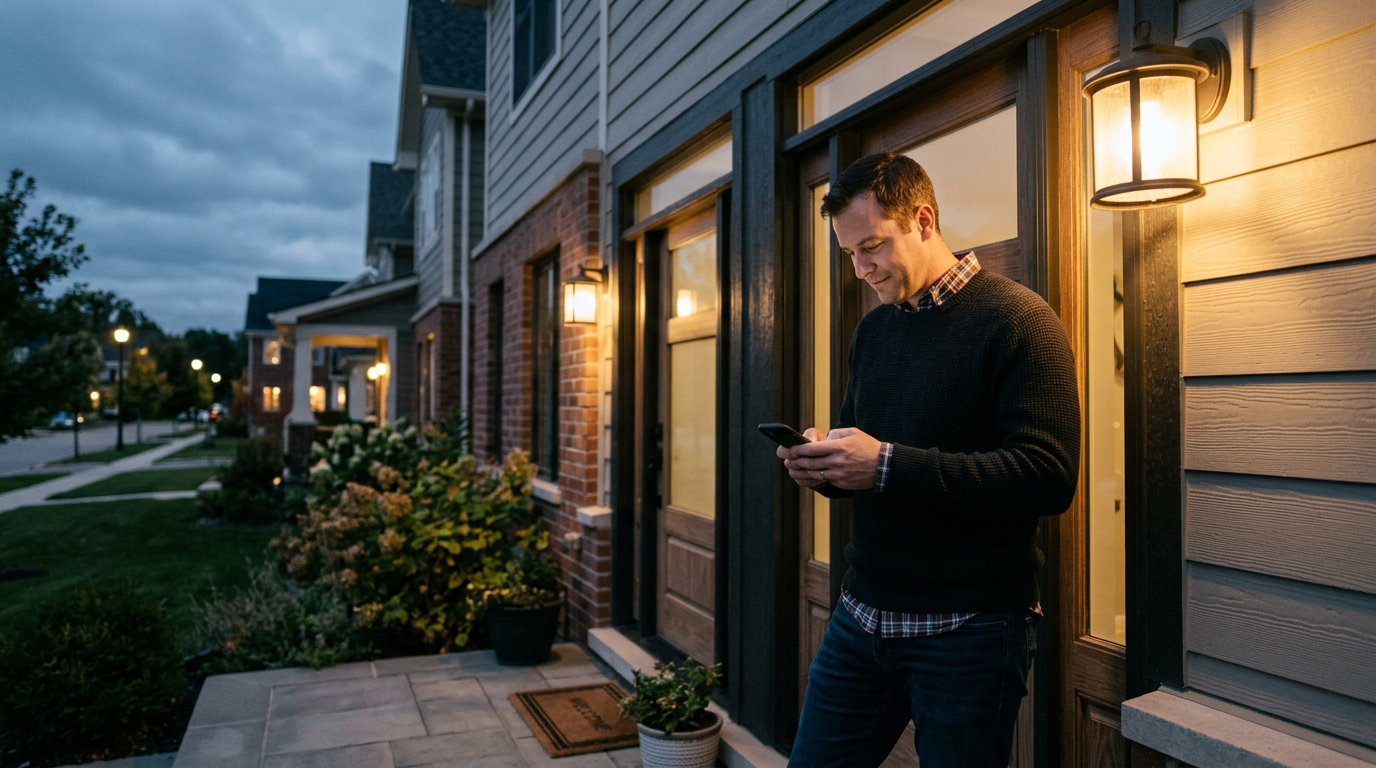
- Look for restrictions on drilling, adhesives, and wiring
- Ask whether doorbell cameras or outdoor cameras are allowed
- Confirm whether you can change locks or add a secondary lock
If you rent your home, you may not be able to hardwire sensors, replace locks, or mount cameras wherever you want. That does not mean you have to settle for poor security.
The best renter-friendly setup is usually a mix of portable devices, smart placement, and a few low-cost habits that work within your lease.
→ Your Homes Connection — Contractor Marketplace — free, takes about 60 seconds.
This guide focuses on what renters can realistically buy, what to avoid, and how to think through your options before you spend money on gear you may not need. The goal is not to create a fortress.
It is to make your place harder to access, easier to monitor, and simpler to take with you when you move.
Start with your lease and your landlord’s rules
Before you shop, check what your lease says about modifications, window hardware, drilling, and exterior cameras. Some landlords allow small changes if you restore things before moving out, while others want written approval for almost anything attached to walls or trim.
It also helps to ask a practical question: what security upgrades are already allowed or built in? Some rentals already have deadbolts, peepholes, secure entry lighting, or package storage policies. Knowing that upfront can keep you from buying duplicates.
We go deeper on this in the details that matter — worth a read before you decide anything.
- Look for restrictions on drilling, adhesives, and wiring.
- Ask whether doorbell cameras or outdoor cameras are allowed.
- Confirm whether you can change locks or add a secondary lock.
- Check if your landlord already provides better lighting or entry controls.
What renter-friendly security gear usually makes sense
→ See what you could be approved for — free, takes about 60 seconds.
For most renters, the strongest value comes from equipment that installs without permanent changes and can move with you later. That typically means wireless, battery-powered, or peel-and-stick products.
The best setup depends on your floor plan, entry points, and budget, but a few categories are especially useful.
Door and window sensors
These are among the easiest devices to use in an apartment or house you do not own. A sensor can alert you when a door or window opens, which is especially helpful for ground-floor units, balcony doors, and bedroom windows that stay open at night.
Sources & further reading
This article is for general information only and is not professional financial, legal, or medical advice.
Tom Bishop — Home & Safety Editor
Tom covers home security, improvement, and energy topics, comparing options on cost, reliability, and real-world performance so homeowners can decide with confidence.
Updated August 2026

No comments:
Post a Comment