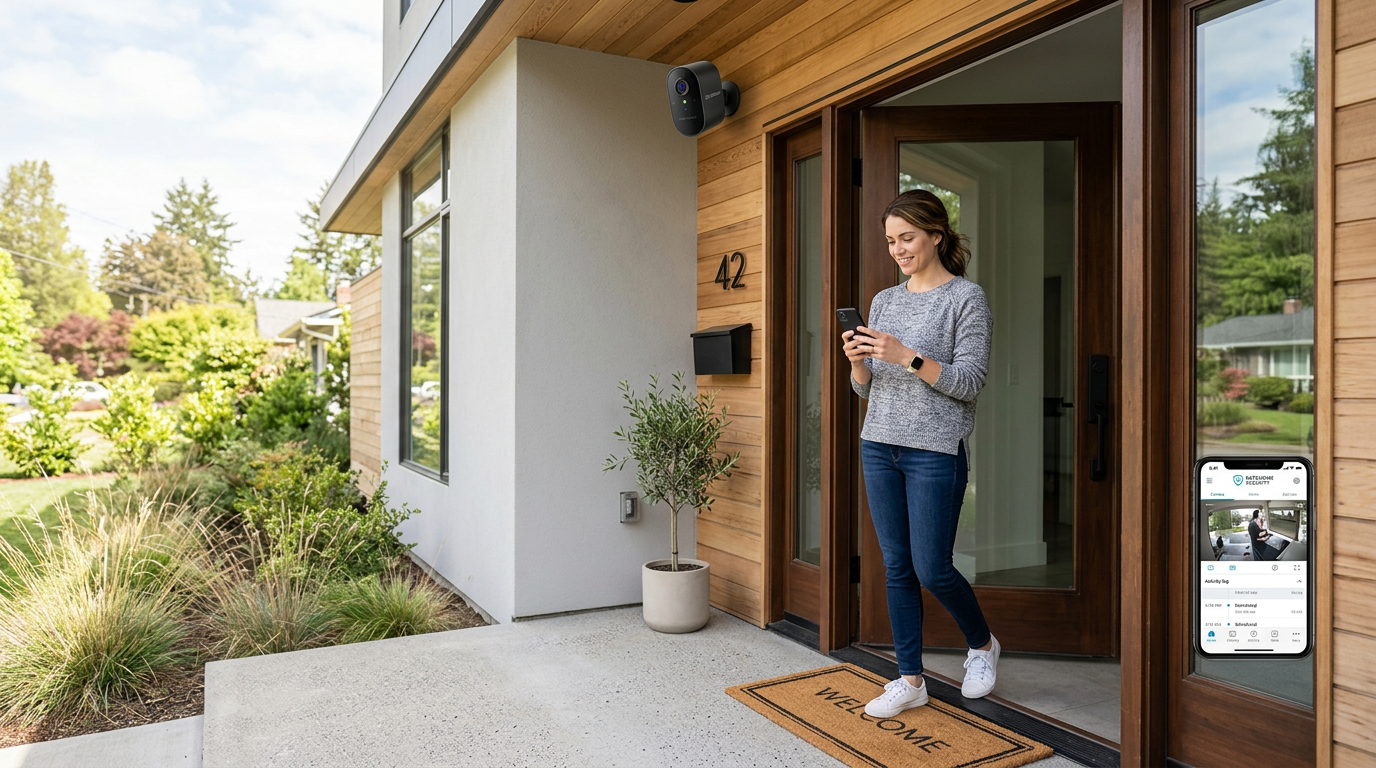
- No-drill installation: Adhesive sensors, window mounts, and plug-in hubs are often easier to use in rentals
- Portable equipment: Cameras, keypads, and smart sensors should be simple to move
- Flexible monitoring: Some systems let you self-monitor through an app, while others offer optional professional monitoring
If you rent, choosing a home security system is a little different than it is for homeowners. You may need landlord approval, you may not be able to drill into walls, and you may want equipment you can take with you when you move.
The good news is that there are plenty of renter-friendly security options that can still help you watch doors, windows, and common entry points.
→ Your Homes Connection — Contractor Marketplace — free, takes about 60 seconds.
The best system is usually the one that fits your lease, your space, and how much setup you want to handle yourself. Before you buy, it helps to think through installation, portability, and whether you want professional monitoring or a self-monitored setup.
What makes a security system renter-friendly?
A renter-friendly system should be easy to install, easy to remove, and unlikely to damage walls, trim, or doors. It should also work well in apartments, condos, and rental homes where you may not control every part of the property.
Look for equipment that uses batteries, adhesive mounting, or existing Wi-Fi rather than hardwired connections. Many renters also prefer systems that can be packed up and reinstalled in a new place without replacing major hardware.
We go deeper on this in our home security guide — worth a read before you decide anything.
- No-drill installation: Adhesive sensors, window mounts, and plug-in hubs are often easier to use in rentals.
- Portable equipment: Cameras, keypads, and smart sensors should be simple to move.
- Flexible monitoring: Some systems let you self-monitor through an app, while others offer optional professional monitoring.
- Lease-friendly design: Devices should avoid permanent changes to doors, frames, or walls.
Ask these questions before you buy
→ See what you could be approved for — free, takes about 60 seconds.
It is worth checking a few details before comparing brands. The wrong setup can create frustration later, especially if you move often or have strict lease terms.
1. Does your lease allow it?
Some landlords are fine with removable devices but not with anything that requires drilling or rewiring. If your lease is unclear, ask for written approval before installing cameras, sensors, or a video doorbell.
Sources & further reading
This article is for general information only and is not professional financial, legal, or medical advice.
Tom Bishop — Home & Safety Editor
Tom covers home security, improvement, and energy topics, comparing options on cost, reliability, and real-world performance so homeowners can decide with confidence.
Updated August 2026

No comments:
Post a Comment