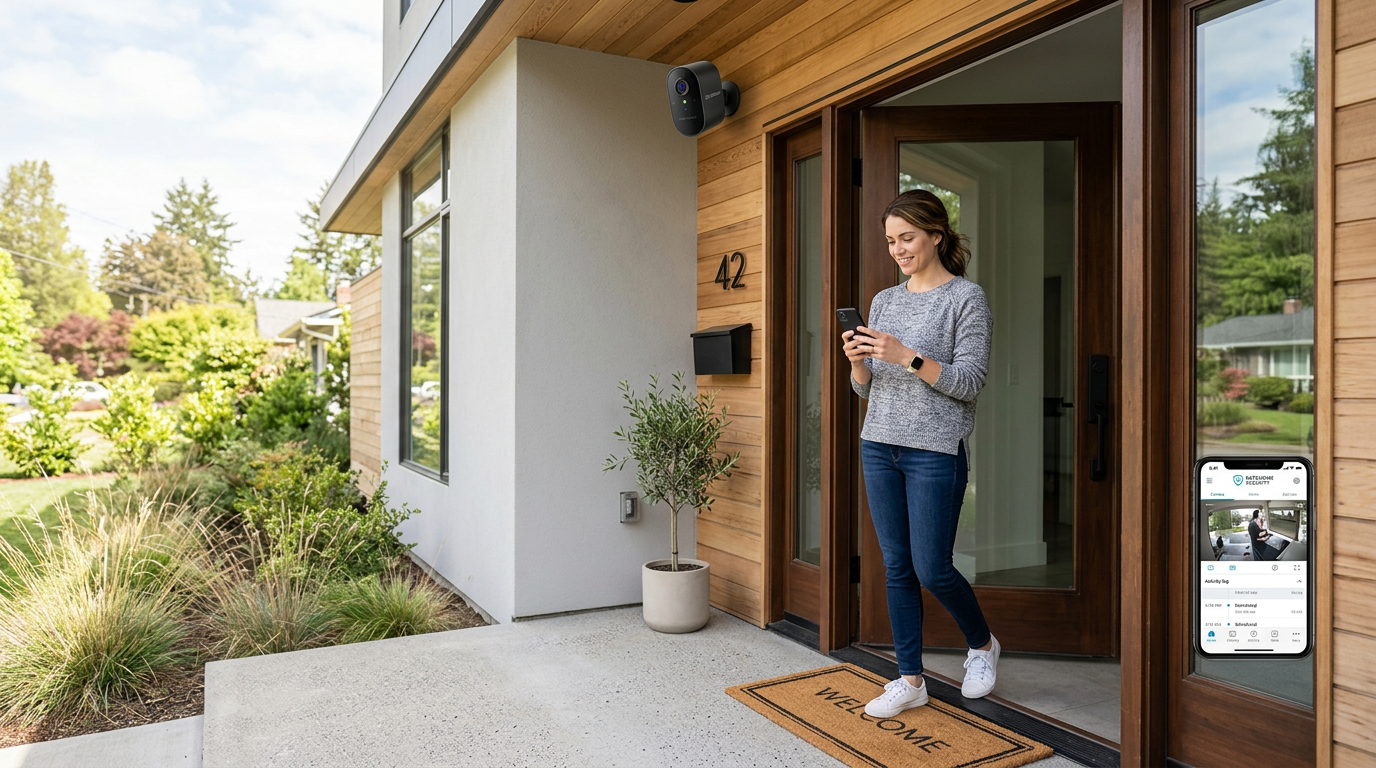
- Entry sensors for doors and accessible windows
- Indoor cameras for monitoring main living areas when you are away
- Video doorbells if your lease and building setup allow them
If you rent, choosing a home security system is a little different from buying one for a house you own. You may need to avoid drilling, keep your landlord happy, and pick gear you can take with you when you move.
The best setup is usually not the biggest one. It’s the one that fits your floor plan, your lease, and your daily habits.
→ Your Homes Connection — Contractor Marketplace — free, takes about 60 seconds.
Before you compare brands or bundles, start with a simple question: what do you actually want to protect? For many renters, the answer is front-door access, package deliveries, windows on the first floor, and a few indoor areas that matter most.
A focused plan often works better than an oversized package with features you may never use.
Start with your lease and your move-out plan
Renters should begin by checking what’s allowed. Some landlords are fine with peel-and-stick sensors and wireless cameras. Others may have restrictions on exterior cameras, door hardware, or anything that changes the apartment permanently.
If you are in a managed building, ask whether there are rules for common areas, balconies, or window placement.
It also helps to think ahead. If you may move in the next year or two, prioritize products that are easy to remove and reinstall. Systems that rely on batteries, adhesive mounts, and Wi-Fi usually fit renter needs better than hardwired equipment.
We go deeper on this in how home security actually works — worth a read before you decide anything.
A setup that travels with you can be more practical than one that feels built into the walls.
Focus on the features renters use most
→ See what you could be approved for — free, takes about 60 seconds.
Not every security feature matters equally in a rental. A smart home package can include dozens of add-ons, but the most useful features tend to be the basics. Look for tools that help you see, hear, and respond quickly if something seems wrong.
Common renter-friendly features
- Entry sensors for doors and accessible windows
- Indoor cameras for monitoring main living areas when you are away
- Video doorbells if your lease and building setup allow them
- Smart locks only if your landlord approves changes to the deadbolt or lock hardware
If you live in a smaller apartment, a few well-placed sensors may be enough. In a larger rental home, you may want a system that can expand room by room. The key is flexibility.
You should be able to start small and add devices later if your needs change.
Sources & further reading
This article is for general information only and is not professional financial, legal, or medical advice.
Tom Bishop — Home & Safety Editor
Tom covers home security, improvement, and energy topics, comparing options on cost, reliability, and real-world performance so homeowners can decide with confidence.
Updated August 2026

No comments:
Post a Comment