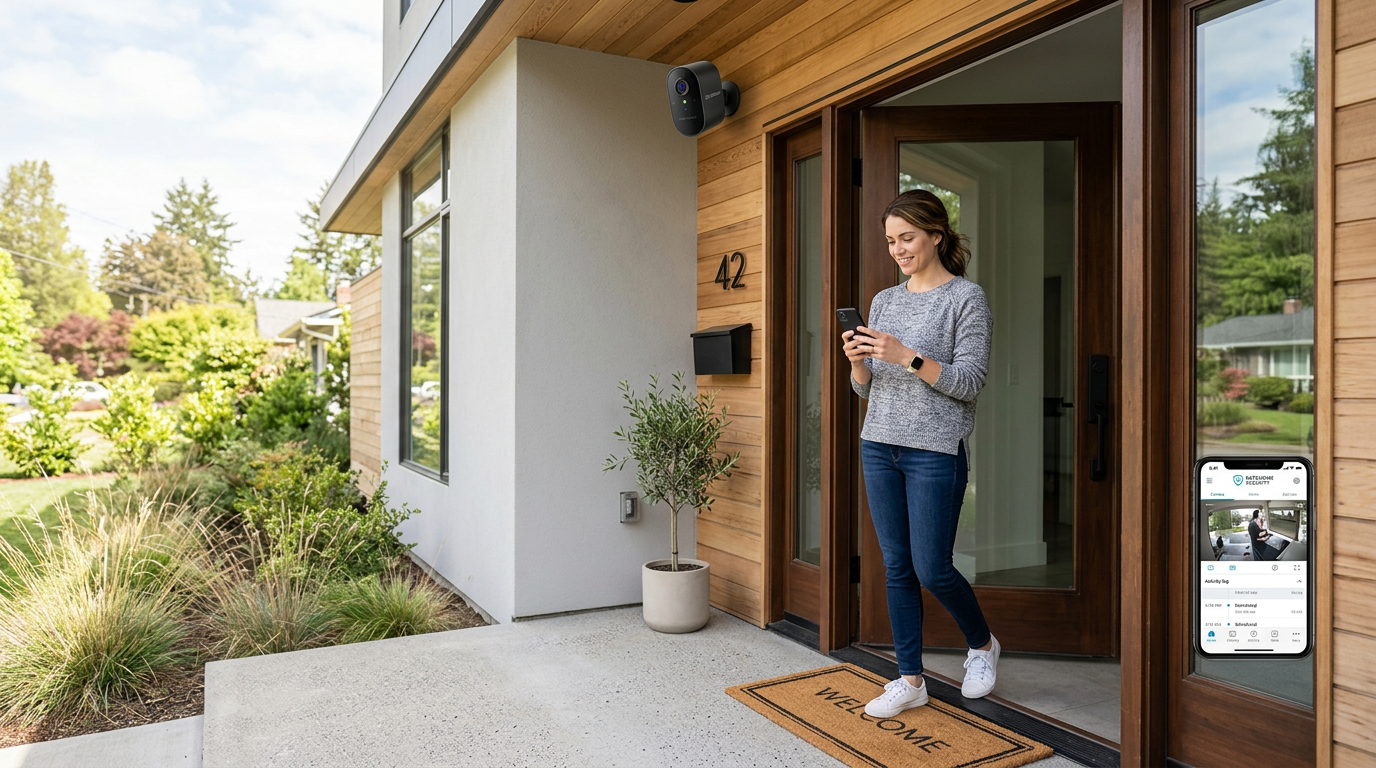
- Front door monitoring: useful for package delivery, visitors, and activity near the entryway
- Driveway or yard coverage: better for wider views and outdoor motion alerts
- Indoor monitoring: often used for pets, kids, or checking on entry points when you’re away
If you’re shopping for a home security camera, the hardest part is often not the price or the brand name. It’s figuring out which camera actually fits your home, your habits, and the places you want to monitor.
A porch camera, a baby monitor-style indoor camera, and a driveway view camera all solve different problems, so the best choice starts with the space, not the spec sheet.
→ Your Homes Connection — Contractor Marketplace — free, takes about 60 seconds.
This guide walks through the decisions that matter most: where the camera will go, how it gets power, what kind of video and alerts you need, and what to think about before you bring one into your home.
Start with the job you want the camera to do
Before comparing features, decide what you want to see and why. That sounds obvious, but it’s the fastest way to avoid buying a camera that looks good on paper and disappoints in real life.
Common use cases include:
- Front door monitoring: useful for package delivery, visitors, and activity near the entryway.
- Driveway or yard coverage: better for wider views and outdoor motion alerts.
- Indoor monitoring: often used for pets, kids, or checking on entry points when you’re away.
- Garage or side entrance coverage: helpful for less visible access points that may be overlooked.
We go deeper on this in how home security actually works — worth a read before you decide anything.
If you only need occasional checks, a simple camera may be enough. If you want reliable evidence of activity, you may want better night vision, stronger motion detection, and storage you can review later.
Choose the right power source and installation style
→ See what you could be approved for — free, takes about 60 seconds.
One of the biggest differences between cameras is how they’re powered. This affects placement, maintenance, and whether the camera fits your home’s layout.
Battery-powered cameras are often easiest to install because you don’t need to run wires. They can be a good fit for renters or people who want flexible placement.
The tradeoff is that batteries need charging or replacement, and some users find that inconvenient if the camera is mounted in a hard-to-reach spot.
Plug-in cameras usually offer continuous power and are often a good choice for indoor use or covered outdoor areas near an outlet. The downside is the cord, which can limit placement and may require a more thoughtful install.
Wired cameras can be more involved to set up, but they may appeal to homeowners who want a more permanent solution. If your home already has existing wiring, that can simplify the process. If not, installation may be more involved than a simple DIY setup.
Sources & further reading
This article is for general information only and is not professional financial, legal, or medical advice.
Tom Bishop — Home & Safety Editor
Tom covers home security, improvement, and energy topics, comparing options on cost, reliability, and real-world performance so homeowners can decide with confidence.
Updated August 2026

No comments:
Post a Comment