Friday, August 28, 2026

How to Choose the Right Home Security System for Your Home

Home Security GuideCameras, monitoring and what actually deters break-ins
Free — takes 60 seconds
Your Homes Connection — Contractor Marketplace
Check availability in your area →
How to Choose the Right Home Security System for Your Home
What you need to know
  • Entry sensors: Useful on doors and windows, especially ground-level access points
  • Motion sensors: Helpful for larger rooms, hallways, or areas with limited entry points
  • Indoor cameras: Can help you check on pets, packages, or activity inside the home

Choosing a home security system is less about finding the “best” brand and more about matching the system to your home, your routine, and how much oversight you want.

A renter in a small apartment may need something very different from a family in a two-story house or a homeowner who travels often.

→ Your Homes Connection — Contractor Marketplace — free, takes about 60 seconds.

The right setup should be easy to live with, simple to use, and strong enough for the risks you actually want to cover.

Before comparing brands, it helps to think in practical terms: what do you want protected, who should be able to use the system, and how involved do you want the monitoring to be? Those answers will narrow your options fast.

Start with the type of monitoring

One of the first choices is whether you want professional monitoring , self-monitoring , or a combination of both. This affects both cost and how alerts are handled.

See what you qualify for
Free to check and it will not affect anything on your end.
Your Homes Connection — Contractor Marketplace →

We go deeper on this in our home security guide — worth a read before you decide anything.

Professional monitoring

With professional monitoring, a monitoring center receives alerts from your system and can contact you or emergency services depending on the event and the plan.

→ See what you could be approved for — free, takes about 60 seconds.

This option is often preferred by people who travel, have children at home, or want another layer of backup if they miss a phone notification.

Self-monitoring

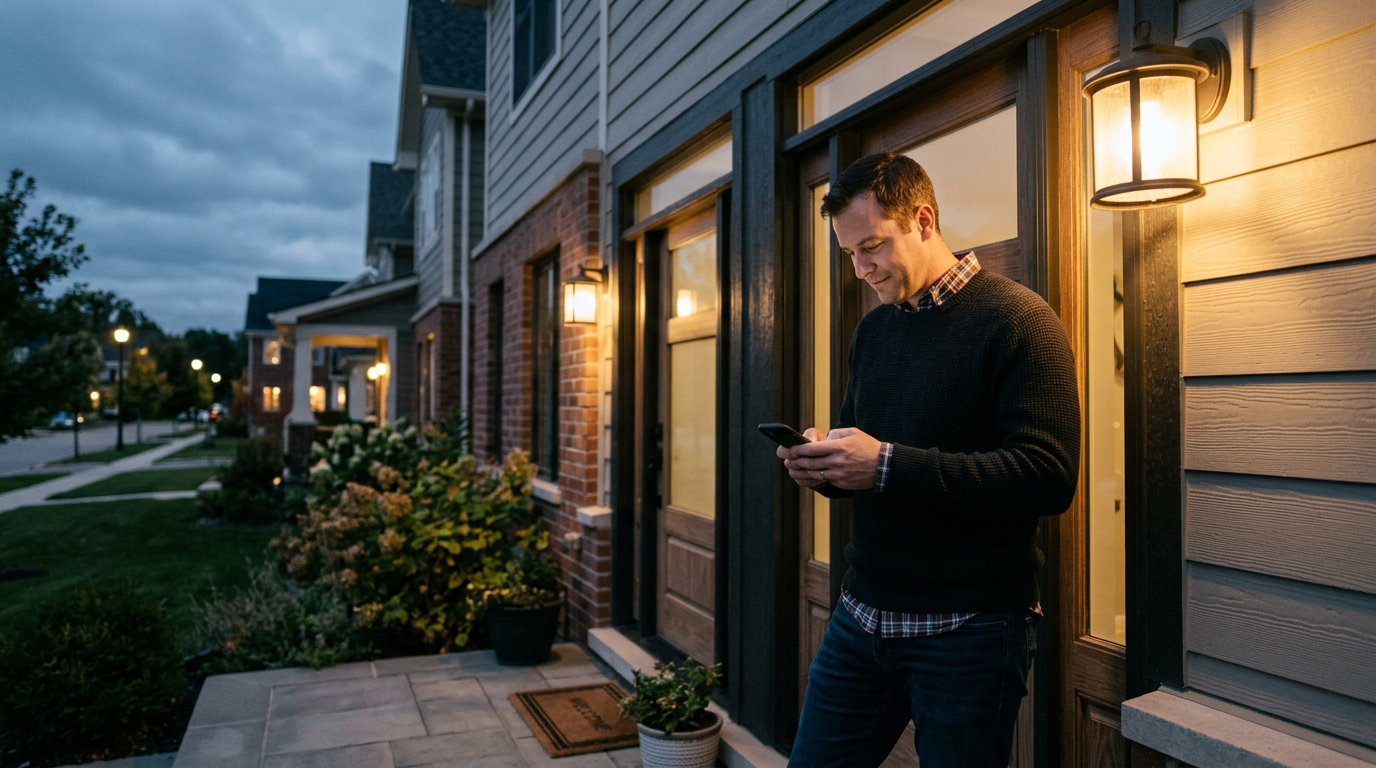
Self-monitored systems send alerts directly to your phone or device. You decide what to do next. This can work well if you are usually available and comfortable taking responsibility for response, but it depends on you seeing and acting on alerts quickly.
How to Choose the Right Home Security System for Your Home
Free 5-page PDF · no charge

The Homeowner's 12-Month Insurance Checkup

A nine-line annual review that routinely finds several hundred dollars a year that homeowners never knew they were overpaying.

  • The nine lines on your policy that actually control your premium
  • Why your rate went up even though you never filed a claim
  • The coverage gap that shows up on most policies after a renovation

Download the free guide

Printable. Nothing to buy to read it.

Sources & further reading

This article is for general information only and is not professional financial, legal, or medical advice.

TB

Tom Bishop — Home & Safety Editor

Tom covers home security, improvement, and energy topics, comparing options on cost, reliability, and real-world performance so homeowners can decide with confidence.

Updated August 2026

More on this topic

Check your options free
Takes under a minute. No cost to look.
Your Homes Connection — Contractor Marketplace →

More Homeowners Are Rethinking Security Cameras After New Privacy Concerns

Home Security GuideCameras, monitoring and what actually deters break-ins
Free — takes 60 seconds
Your Homes Connection — Contractor Marketplace
Check availability in your area →
More Homeowners Are Rethinking Security Cameras After New Privacy Concerns
What you need to know
  • Check whether cameras store footage locally, in the cloud, or both
  • Use two-factor authentication on all security apps
  • Review camera angles to avoid unnecessary privacy exposure

More homeowners are rethinking security cameras after new privacy concerns

New consumer guide urges buyers to look beyond alarms and ask where footage goes, who can access it, and how devices are secured

→ Your Homes Connection — Contractor Marketplace — free, takes about 60 seconds.

NEW YORK, N.Y. — August 28, 2026 — Home security shoppers are paying closer attention to privacy, app permissions, and device security as connected cameras, video doorbells, and smart locks become standard features in many households.

What once felt like a simple choice between a basic alarm and a camera system has become a more complicated consumer decision.

Today’s home security products often rely on cloud storage, mobile apps, and always-on connectivity, which means buyers are not only protecting their homes — they are also managing data, passwords, and software updates.

Consumer advisers say the shift is being driven by a mix of seasonal travel planning, rising interest in remote monitoring, and growing awareness that poorly configured devices can create new vulnerabilities.

The question for homeowners is no longer just whether a device records activity, but whether it records the right areas, stores footage securely, and keeps unwanted users out.

“The biggest mistake consumers make is assuming a recognizable brand name automatically means strong protection,” said Industry Analyst .

See what you qualify for
Free to check and it will not affect anything on your end.
Your Homes Connection — Contractor Marketplace →

We go deeper on this in what to look at first — worth a read before you decide anything.

Experts recommend that buyers check a few basics before adding any connected security device.

That includes whether the product supports two-factor authentication, whether footage can be stored locally or only in the cloud, whether the company has a clear policy for data retention, and whether the device receives ongoing firmware updates.

→ See what you could be approved for — free, takes about 60 seconds.

Homeowners should also think carefully about camera placement. Devices aimed at shared sidewalks, neighboring property, or interior living spaces may raise privacy concerns, especially in apartment buildings, rental homes, and closely spaced neighborhoods.

A well-placed camera can help with package theft or entryway monitoring without creating unnecessary exposure inside or outside the property line.

Smart locks are drawing similar scrutiny. While they offer convenience for families, guests, and service providers, they also rely on strong password hygiene, updated apps, and secure backup access in case of battery failure or network outages.

Security professionals say consumers should treat lock credentials the same way they treat banking or email passwords.

The latest consumer advice emphasizes that buyers do not need to replace every device in the house. Instead, they can start by reviewing existing settings, removing unused accounts, changing default passwords, and making sure anyone with access to the app truly needs it.

More Homeowners Are Rethinking Security Cameras After New Privacy Concerns
Free 5-page PDF · no charge

The Homeowner's 12-Month Insurance Checkup

A nine-line annual review that routinely finds several hundred dollars a year that homeowners never knew they were overpaying.

  • The nine lines on your policy that actually control your premium
  • Why your rate went up even though you never filed a claim
  • The coverage gap that shows up on most policies after a renovation

Download the free guide

Printable. Nothing to buy to read it.

Sources & further reading

This article is for general information only and is not professional financial, legal, or medical advice.

TB

Tom Bishop — Home & Safety Editor

Tom covers home security, improvement, and energy topics, comparing options on cost, reliability, and real-world performance so homeowners can decide with confidence.

Updated August 2026

More on this topic

Check your options free
Takes under a minute. No cost to look.
Your Homes Connection — Contractor Marketplace →

Thursday, August 27, 2026

How to Choose a Home Security System That Fits Your Home

Home Security GuideCameras, monitoring and what actually deters break-ins
Free — takes 60 seconds
Your Homes Connection — Contractor Marketplace
Check availability in your area →
How to Choose a Home Security System That Fits Your Home
What you need to know
  • Basic intrusion alerts: Best if you mainly want to know when a door, window, or interior space is opened
  • Video awareness: Useful if you want to see packages, visitors, or activity around entry points
  • Whole-home protection: Better if you want a mix of sensors, cameras, and monitoring for emergencies

Choosing a home security system is less about finding the “best” brand and more about matching the setup to your home, routines, and comfort level.

A system that works well in a condo may be overkill for a larger house, while a simple camera-only setup may not be enough if you want whole-home protection.

→ Your Homes Connection — Contractor Marketplace — free, takes about 60 seconds.

The good news is that most security systems break down into a few understandable pieces: monitoring, equipment, installation, and smart-home features.

If you know what each part does, it becomes much easier to compare options without getting distracted by package names or flashy add-ons. Start with how you want the system to function day to day, then narrow your choices from there.

Start with your main security goal

Before comparing brands, decide what you actually want the system to do. Some households mainly want door and window alerts. Others want video, smoke and carbon monoxide monitoring, or the ability to check in remotely while traveling.

Your goal should shape the system, not the other way around.

See what you qualify for
Free to check and it will not affect anything on your end.
Your Homes Connection — Contractor Marketplace →

We go deeper on this in the full breakdown here — worth a read before you decide anything.

  • Basic intrusion alerts: Best if you mainly want to know when a door, window, or interior space is opened.
  • Video awareness: Useful if you want to see packages, visitors, or activity around entry points.
  • Whole-home protection: Better if you want a mix of sensors, cameras, and monitoring for emergencies.
  • Convenience and automation: A good fit if you want to control locks, lights, or thermostats from the same app.

It also helps to think about your household routines. For example, if people are home at different hours, you may want a system that’s easy to arm and disarm without confusion. If you rent, portability may matter more than hardwired equipment.

→ See what you could be approved for — free, takes about 60 seconds.

If you own a larger home, you may need more sensors than a starter kit provides.

Understand the difference between self-monitoring and professional monitoring

One of the biggest decisions is whether you want self-monitoring or professional monitoring. With self-monitoring, you get alerts on your phone and decide what to do next.

With professional monitoring, a monitoring center can respond to certain alarms based on the service plan and system settings.

Neither option is automatically better. Self-monitoring can work well if you’re usually available and mainly want information. Professional monitoring may appeal if you travel often, keep irregular hours, or want an additional layer of response when you can’t check your phone right away.

How to Choose a Home Security System That Fits Your Home
Free 5-page PDF · no charge

The Homeowner's 12-Month Insurance Checkup

A nine-line annual review that routinely finds several hundred dollars a year that homeowners never knew they were overpaying.

  • The nine lines on your policy that actually control your premium
  • Why your rate went up even though you never filed a claim
  • The coverage gap that shows up on most policies after a renovation

Download the free guide

Printable. Nothing to buy to read it.

Sources & further reading

This article is for general information only and is not professional financial, legal, or medical advice.

TB

Tom Bishop — Home & Safety Editor

Tom covers home security, improvement, and energy topics, comparing options on cost, reliability, and real-world performance so homeowners can decide with confidence.

Updated August 2026

More on this topic

Check your options free
Takes under a minute. No cost to look.
Your Homes Connection — Contractor Marketplace →

Home Security for Renters: What to Buy and What to Skip

Home Security GuideCameras, monitoring and what actually deters break-ins
Free — takes 60 seconds
Your Homes Connection — Contractor Marketplace
Check availability in your area →
Home Security for Renters: What to Buy and What to Skip
What you need to know
  • Look for restrictions on drilling, adhesives, and wiring
  • Ask whether doorbell cameras or outdoor cameras are allowed
  • Confirm whether you can change locks or add a secondary lock

If you rent your home, you may not be able to hardwire sensors, replace locks, or mount cameras wherever you want. That does not mean you have to settle for poor security.

The best renter-friendly setup is usually a mix of portable devices, smart placement, and a few low-cost habits that work within your lease.

→ Your Homes Connection — Contractor Marketplace — free, takes about 60 seconds.

This guide focuses on what renters can realistically buy, what to avoid, and how to think through your options before you spend money on gear you may not need. The goal is not to create a fortress.

It is to make your place harder to access, easier to monitor, and simpler to take with you when you move.

Start with your lease and your landlord’s rules

Before you shop, check what your lease says about modifications, window hardware, drilling, and exterior cameras. Some landlords allow small changes if you restore things before moving out, while others want written approval for almost anything attached to walls or trim.

It also helps to ask a practical question: what security upgrades are already allowed or built in? Some rentals already have deadbolts, peepholes, secure entry lighting, or package storage policies. Knowing that upfront can keep you from buying duplicates.

See what you qualify for
Free to check and it will not affect anything on your end.
Your Homes Connection — Contractor Marketplace →

We go deeper on this in the details that matter — worth a read before you decide anything.

  • Look for restrictions on drilling, adhesives, and wiring.
  • Ask whether doorbell cameras or outdoor cameras are allowed.
  • Confirm whether you can change locks or add a secondary lock.
  • Check if your landlord already provides better lighting or entry controls.

What renter-friendly security gear usually makes sense

→ See what you could be approved for — free, takes about 60 seconds.

For most renters, the strongest value comes from equipment that installs without permanent changes and can move with you later. That typically means wireless, battery-powered, or peel-and-stick products.

The best setup depends on your floor plan, entry points, and budget, but a few categories are especially useful.

Door and window sensors

These are among the easiest devices to use in an apartment or house you do not own. A sensor can alert you when a door or window opens, which is especially helpful for ground-floor units, balcony doors, and bedroom windows that stay open at night.

Home Security for Renters: What to Buy and What to Skip
Free 5-page PDF · no charge

The Homeowner's 12-Month Insurance Checkup

A nine-line annual review that routinely finds several hundred dollars a year that homeowners never knew they were overpaying.

  • The nine lines on your policy that actually control your premium
  • Why your rate went up even though you never filed a claim
  • The coverage gap that shows up on most policies after a renovation

Download the free guide

Printable. Nothing to buy to read it.

Sources & further reading

This article is for general information only and is not professional financial, legal, or medical advice.

TB

Tom Bishop — Home & Safety Editor

Tom covers home security, improvement, and energy topics, comparing options on cost, reliability, and real-world performance so homeowners can decide with confidence.

Updated August 2026

More on this topic

Check your options free
Takes under a minute. No cost to look.
Your Homes Connection — Contractor Marketplace →

How to Choose a Home Security System for Apartments

Home Security GuideCameras, monitoring and what actually deters break-ins
Free — takes 60 seconds
Your Homes Connection — Contractor Marketplace
Check availability in your area →
How to Choose a Home Security System for Apartments
What you need to know
  • Whether you can use adhesive mounts instead of screws
  • If exterior-facing cameras are allowed
  • Whether any devices can be installed over the door or window frame

If you rent an apartment, choosing a home security system is a little different than shopping for a house. You may need to avoid drilling holes, protect a smaller space, and work within lease rules or building policies.

The good news: there are plenty of systems that fit renters well, especially if you focus on portability, easy installation, and the features that matter most in a multi-unit building.

→ Your Homes Connection — Contractor Marketplace — free, takes about 60 seconds.

This guide walks through what to look for so you can narrow your options without overbuying or ending up with equipment that is awkward to move when your lease ends.

Start with your lease and building rules

Before comparing equipment, check what your lease allows. Some landlords are fine with removable adhesive mounts and wireless devices, while others prohibit exterior cameras, window modifications, or changes to entry hardware.

If you live in a condo-style building or a managed community, there may also be rules about cameras in shared hallways, balconies, or common areas.

Ask about these basics first:

  • Whether you can use adhesive mounts instead of screws
  • If exterior-facing cameras are allowed
  • Whether any devices can be installed over the door or window frame
  • If your building has a front desk, concierge, or package room that affects delivery concerns

Getting clarity early can help you avoid buying equipment you later have to remove or return.

See what you qualify for
Free to check and it will not affect anything on your end.
Your Homes Connection — Contractor Marketplace →

We go deeper on this in how home security actually works — worth a read before you decide anything.

Prioritize portable, wireless gear

For most renters, portability is the biggest advantage to a security system. Wireless equipment is usually easier to set up, easier to remove, and more practical if you move again.

→ See what you could be approved for — free, takes about 60 seconds.

That does not mean wired systems are bad; they are just usually less convenient for apartments.

Look for devices that can be relocated without leaving a mess or requiring professional installation. Common renter-friendly options include:

  • Entry sensors for apartment doors and accessible windows
  • Motion sensors for a main living area or hallway
  • Indoor cameras for monitoring entry points or package delivery
  • Smart locks only if your landlord permits them and the door hardware is compatible

If you want a system that moves with you, ask whether the provider sells equipment in a way that makes expansion easy.

A starter kit that can be built out later is often more useful than a large package full of devices you may never use.

Choose features that fit apartment living

How to Choose a Home Security System for Apartments
Free 5-page PDF · no charge

The Homeowner's 12-Month Insurance Checkup

A nine-line annual review that routinely finds several hundred dollars a year that homeowners never knew they were overpaying.

  • The nine lines on your policy that actually control your premium
  • Why your rate went up even though you never filed a claim
  • The coverage gap that shows up on most policies after a renovation

Download the free guide

Printable. Nothing to buy to read it.

Sources & further reading

This article is for general information only and is not professional financial, legal, or medical advice.

TB

Tom Bishop — Home & Safety Editor

Tom covers home security, improvement, and energy topics, comparing options on cost, reliability, and real-world performance so homeowners can decide with confidence.

Updated August 2026

More on this topic

Check your options free
Takes under a minute. No cost to look.
Your Homes Connection — Contractor Marketplace →

3 Smart Home Security Blind Spots Most People Miss

Home Security GuideCameras, monitoring and what actually deters break-ins
Free — takes 60 seconds
Your Homes Connection — Contractor Marketplace
Check availability in your area →
3 Smart Home Security Blind Spots Most People Miss
What you need to know
  • Most break-ins don’t start with a movie-style smash-and-grab
  • They start with one easy mistake homeowners overlook: a blind spot
  • Your front door is the first place to check

HOOK

Most break-ins don’t start with a movie-style smash-and-grab. They start with one easy mistake homeowners overlook: a blind spot.

→ Your Homes Connection — Contractor Marketplace — free, takes about 60 seconds.

[Quick cuts: front door, side window, Wi-Fi router, and backyard gate]

KEY POINT 1

Your front door is the first place to check. If you still have a weak strike plate, loose screws, or a lock that feels wobbly, fix that first. A solid deadbolt helps, but the frame has to be strong too.

See what you qualify for
Free to check and it will not affect anything on your end.
Your Homes Connection — Contractor Marketplace →

We go deeper on this in this rundown — worth a read before you decide anything.

[Close-up: deadbolt, strike plate, screwdriver tightening screws]

KEY POINT 2

→ See what you could be approved for — free, takes about 60 seconds.

Next, look at windows and side entrances. Keep trees and furniture from creating cover, and make sure any window near a latch is locked and visible from the street or a neighbor’s view. Lighting matters more than people think.

[B-roll: trimming bushes, turning on porch light, checking window locks]

3 Smart Home Security Blind Spots Most People Miss
Free 5-page PDF · no charge

The Homeowner's 12-Month Insurance Checkup

A nine-line annual review that routinely finds several hundred dollars a year that homeowners never knew they were overpaying.

  • The nine lines on your policy that actually control your premium
  • Why your rate went up even though you never filed a claim
  • The coverage gap that shows up on most policies after a renovation

Download the free guide

Printable. Nothing to buy to read it.

Sources & further reading

This article is for general information only and is not professional financial, legal, or medical advice.

TB

Tom Bishop — Home & Safety Editor

Tom covers home security, improvement, and energy topics, comparing options on cost, reliability, and real-world performance so homeowners can decide with confidence.

Updated August 2026

More on this topic

Check your options free
Takes under a minute. No cost to look.
Your Homes Connection — Contractor Marketplace →

How to Choose a Home Security System for Renters

Home Security GuideCameras, monitoring and what actually deters break-ins
Free — takes 60 seconds
Your Homes Connection — Contractor Marketplace
Check availability in your area →
How to Choose a Home Security System for Renters
What you need to know
  • drilling, screws, and wall anchors
  • window stickers or visible cameras
  • shared hallways, entrances, and common areas

Renters often want the same peace of mind as homeowners, but with a different set of rules: no drilling into walls, no permanent wiring, and sometimes no changes at all without permission.

The good news is that modern home security has a lot of renter-friendly options. The challenge is sorting out what truly fits a lease, a budget, and a living space that may change in a year or two.

→ Your Homes Connection — Contractor Marketplace — free, takes about 60 seconds.

If you’re choosing a security setup for an apartment, condo, or rental house, the best system is usually the one that is easy to install, simple to move, and flexible enough to grow with you.

Here’s how to compare your options in a way that makes sense for renters.

Start with your lease and landlord rules

Before you shop, check what your lease allows. Some landlords are fine with removable devices, while others limit outdoor cameras, doorbell cameras, or anything that changes the property. If you live in a condo or multi-unit building, you may also have association rules.

Look for any terms related to:

  • drilling, screws, and wall anchors
  • window stickers or visible cameras
  • shared hallways, entrances, and common areas
  • smart locks or changes to the front door hardware
See what you qualify for
Free to check and it will not affect anything on your end.
Your Homes Connection — Contractor Marketplace →

We go deeper on this in our home security guide — worth a read before you decide anything.

If you’re not sure, ask for written approval. That can save time later if you ever need to show that your setup was allowed.

Focus on systems that are easy to install and remove

→ See what you could be approved for — free, takes about 60 seconds.

For renters, installation matters just as much as features. A system that needs hardwiring or permanent mounting may be more trouble than it’s worth. Look for equipment advertised as wireless , portable , or no-drill , but read the details carefully.

Some products are wireless only in the sense that they don’t need to connect by cable between devices; they may still require screws or adhesive mounts.

Good renter-friendly features to look for

  • Peel-and-stick sensors for doors and windows
  • Battery-powered cameras that can be repositioned
  • Keypad hubs that sit on a shelf or table
  • Adhesive mounts that remove cleanly

Before using adhesive, test whether it works well on painted walls or frames. Some adhesives hold poorly in humid spaces, and others can leave residue when removed.

How to Choose a Home Security System for Renters
Free 5-page PDF · no charge

The Homeowner's 12-Month Insurance Checkup

A nine-line annual review that routinely finds several hundred dollars a year that homeowners never knew they were overpaying.

  • The nine lines on your policy that actually control your premium
  • Why your rate went up even though you never filed a claim
  • The coverage gap that shows up on most policies after a renovation

Download the free guide

Printable. Nothing to buy to read it.

Sources & further reading

This article is for general information only and is not professional financial, legal, or medical advice.

TB

Tom Bishop — Home & Safety Editor

Tom covers home security, improvement, and energy topics, comparing options on cost, reliability, and real-world performance so homeowners can decide with confidence.

Updated August 2026

More on this topic

Check your options free
Takes under a minute. No cost to look.
Your Homes Connection — Contractor Marketplace →